
Published 16/06/26

Published 16/06/26
From material innovation to social impact, BRICK AWARD 26 has once again demonstrated why brick remains one of the most relevant and expressive materials in contemporary architecture.
Held in Vienna and hosted by wienerberger, the biennial event brought together leading architects from across the globe, not only to celebrate outstanding projects, but to exchange ideas on how architecture can respond to some of today’s most pressing challenges, from climate resilience to inclusive urbanisation.
Since 2004, the BRICK AWARD has provided a platform for architects to showcase innovative uses of brick and ceramic materials.
The 2026 winners highlight the versatility of brick across typologies, climates and cultures, spanning five categories, alongside a Grand Prize and a new Special Prize.
Taking the top honour, the Đạo Mẫu Temple and Museum in Soc Son, Vietnam, designed by ARB Architects, exemplifies how architecture can connect place, memory and community.
The project’s use of around six million reclaimed clay tiles, sourced from local homes, demonstrates a strong model of circular design, and delivers a carbon-negative outcome.
For architects, the message is clear: material reuse and cultural narrative can be integral to delivering both sustainability and meaning in design.


The strength of BRICK AWARD 26 lies in the breadth of its winning projects, offering insights for practice across the UK built environment.
Together, these projects reinforce brick’s ability to respond to multiple priorities - performance, aesthetics, sustainability and social value.
Click here to discover more about the BRICK AWARD winning projects here.


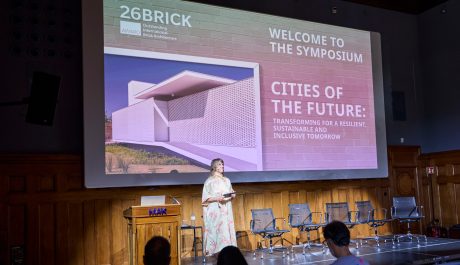
Beyond the ceremony, the BRICK AWARD Architecture Symposium provided a platform for deeper discussion, focused on the theme: “Cities of the Future: Transforming for a Resilient, Sustainable and Inclusive Tomorrow.”
With cities responsible for more than 70% of global greenhouse gas emissions, the role of architects in shaping sustainable urban environments has never been more critical.
1. Building with place
Architects emphasised the importance of designing in dialogue with local culture, climate and landscape, rather than imposing universal solutions.
2. Material intelligence
From site-sourced materials to traditional craftsmanship, discussions reinforced how materials like brick can act as carriers of memory, identity and environmental performance.
3. Adaptive reuse and circularity
Speakers highlighted the value of reworking existing structures and materials, supporting more resource-efficient approaches to urban development.
4. Social and environmental resilience
Projects and debates underscored the need for inclusive, community-focused design, alongside strategies that support climate adaptation and biodiversity.
While the projects span continents, the underlying themes resonate strongly with the UK market:
The BRICK AWARD 26 demonstrates that brick remains central to addressing these challenges, offering durability, thermal performance and architectural flexibility.
As Heimo Scheuch, CEO of wienerberger, reflected, the winning projects show how brick and ceramic materials continue to evolve - addressing climate challenges while creating architecture that inspires and endures.
From experimental student builds to landmark public spaces, BRICK AWARD 26 reinforces a clear message: the future of architecture will be shaped not just by new technologies, but by how intelligently we use the materials we already know.
“wienerberger is proud to once again be providing a forum for the world’s leading innovators to connect with their peers and further best practice in global architecture. The urgency of this debater and the insights it brings are vital, not only for our industry but for the entire built world.” - Heimo Scheuch, CEO, wienerberger


