
Published 26/06/26

Published 26/06/26
.jpg)
With the government’s Warm Homes Plan signalling a £15 billion commitment to upgrading the UK’s housing stock, and the Future Homes Standard expected later this year, 2026 is shaping up to be a pivotal moment for the solar industry. For contractors and installers, the shift towards widespread rooftop solar - driven by both regulation and consumer demand - brings major opportunities, but also important considerations around safe, compliant roofing practice.
Jacob Hill, Head of Category for Roof and Renewables at wienerberger UK & Ireland, explains what these changes mean on the roof.
The Warm Homes Plan aims to upgrade 5 million homes and lift 1 million households out of fuel poverty by 2030. It combines solar panels, battery storage, heat pumps and improved insulation to boost both comfort and energy efficiency. While support continues to focus on low-income owner occupiers, the introduction of low or zero interest loans marks a significant shift: for the first time, average households will have much broader access to solar technologies.
Regulation is pushing in the same direction. The 2021 update to Part L of the Building Regulations raised the bar with a 31% carbon reduction requirement for new homes. The Future Homes Standard is expected to go further, demanding a 75–80% reduction in emissions compared with 2013 levels. Meeting these ambitious targets will require housebuilders to maximise solar generation and that means making the most of every square metre of roof space.
As solar adoption accelerates, installers are looking for clear and consistent guidance. For traditional on-roof systems, the Microgeneration Certification Scheme (MCS) recommends a 300 - 400 mm gap between the top of the array and the ridge, as set out in section 3.9.6 of the Solar PV Installation Standard. This helps limit wind induced stresses on both panels and roof structures.
However, when it comes to Building‑Integrated Photovoltaics (BIPV), such as wienerberger’s Sandtoft in‑roof solar panels, the picture is less clear. There are currently no statutory requirements or agreed industry standards governing how much verge, abutment, or valley clearance a BIPV array should have.
This has led to ongoing debate within the industry. Installers must balance the desire to maximise solar output with their responsibility to fix and detail roof tiles correctly, all while ensuring safe access and maintenance for roofers.
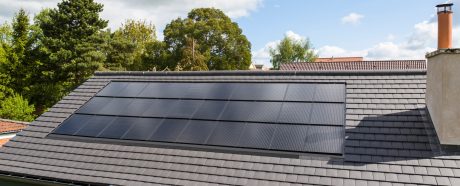
While BIPV guidance continues to evolve, one standard remains non‑negotiable: BS 5534, the Code of Practice for Slating and Tiling. Correct tile fixing is essential - not only for compliance, but for ensuring roofs remain safe, resilient and long‑lasting.
To meet BS 5534 requirements, installers must ensure that enough tiles can be correctly fixed around the BIPV array. This makes clearance a functional necessity as well as a design decision.

Based on current best practice and tile‑fixing requirements, contractors should allow:
These recommendations help ensure secure tile fixing, easier installation and maintenance access, reduced risk of wind uplift and a compliant, durable roofing system
As new guidance emerges, these principles will continue to play a critical role in achieving safe, high‑performing BIPV installations.
The Warm Homes Plan and Future Homes Standard represent a monumental shift in how UK homes will be built, upgraded, and powered. For contractors and installers, this transition brings both complexity and opportunity.
Ensuring BIPV systems are installed in line with BS 5534 - while still maximising solar yield - will be essential. Collaboration across manufacturers, installers, and industry bodies will be key to developing consistent, practical guidance as the ‘rooftop solar revolution’ accelerates.
For tailored advice on photovoltaic system design or support with wienerberger’s in-roof solutions, our team is always on hand to help.


