Published 16/09/26

Published 16/09/26
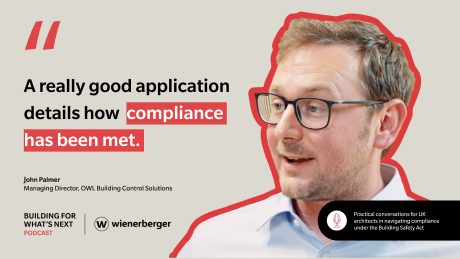
In the first episode of Building for what's next, Steve Dyson speaks with John Palmer, Managing Director of OWL Building Control Solutions, about the Building Safety Act 2022, the changing responsibilities of duty-holders and what these changes mean for those designing and delivering buildings.
Here, John shares some of his own experience as a Registered Building Inspector and Building Control Approver, alongside practical considerations for Principal Designers, Principal Contractors and clients navigating the evolving regulatory landscape.
The Building Safety Act 2022 represented a significant shift in the legislative regime within the Built Environment in England and Wales. As a Building Control professional, my role has been directly impacted by the BSA 2022. In particular, I have had to pass a competency assessment to become a Registered Building Inspector (RBI), enabling me to undertake plan checks and site inspections for the purposes of building control. In addition - as a Managing Director of an RBCA (Registered Building Control Approver – previously Approved Inspectors) – I am responsible for ensuring that my organisation (OWL BCS) adheres to the relevant standards we must adhere to (also enabled by the BSA 2022).
It is important to remember that, despite the challenges the BSA 2022 imposes on professionals within the construction industry, we must remain mindful of the systemic failures across the sector that contributed to the Grenfell Tower disaster in 2017 and the loss of 72 lives.
It is therefore understandable that the introduction of the Duty-Holder Regime under Part 2A of the Building Regulations has presented significant challenges for those undertaking Principal Designer (PD) and Principal Contractor (PC) roles. When undertaking my role in building control, I always remember that the primary aim of the Building Regulations 2010 is to set standards that protect the safety, health and welfare of people in and around buildings. I would urge Principal Designers to take a similar approach when considering the implications of the decisions they make in relation to the design of buildings.
Despite these changes (Part 2a) being in place since October 2023 – I continue to be surprised regarding PD / PC and client’s unfamiliarity regarding their legal obligations. Confusion relating to the similarities of The Building Regulations 2010 and those of CDM 2015 (the terminology being identical) has (I believe), delayed the uptake and understanding of PDs and PCs. However, with the legislation being in effect for nearly three years, I believe that now is the time that all duty-holders must recognise their requirements relating to competence and procedural duties.
The Building Regulations are minimum standards. As such, any designer or builder and client must ensure adherence to their requirements. In relation to the technical decisions that support that design, I would highlight the guidance published by the Building Safety Regulator (BSR) within their document ‘The Strategic Context’. Section 3.7 of this document says:
3.7 Building control should expect duty holders to proactively demonstrate how their project will comply with building regulations. This should include an explanation of how their project meets the functional requirements of the building regulations from design into occupation. This should include:
I would therefore recommend that, when PDs are making decisions relating to the design of building work, they identify the guidance they have used, such as Approved Documents, British Standards or other relevant guidance. They should also explain why that guidance is appropriate for the building work being designed and, consequently, how the design meets the functional requirements of the Building Regulations 2010.
I would also endorse the need for PDs to summarise instances where they have departed from the guidance, explaining why they have done so and how, despite the departure, the design still meets the requirements of the Building Regulations.
In relation to interaction with Building Control Bodies (BCBs) – I would highlight that RBIs are ultimately operating within a statutory framework. As such – any decision / question / query / challenge that comes from a Registered Building Inspector must have a basis in legal understanding. For PDs, therefore, I would highly recommend that, if they wish to challenge an RBI's interpretation, they frame their response in relation to the legal requirements of the Building Regulations themselves.