
Published 08/05/26

Published 08/05/26
Every year, World Migratory Bird Day (9th May) shines a spotlight on one of nature’s most remarkable phenomena: the epic journeys birds make across continents, oceans and flyways. Founded in 1993 by the Smithsonian Migratory Bird Center, the day raises awareness of the conservation challenges migratory birds face, and the role organisations like ours can play in protecting them.
The 2026 theme, “Every Bird Counts – Your Observations Matter!”, puts citizen science at the heart of conservation. It recognises that individual observations, when shared, can support national and international efforts to protect species and habitats. For us, this means empowering colleagues to notice, record and share what they see on our sites - turning everyday observations into meaningful conservation data.
As we head into wienerberger’s Biodiversity Action Month this May, it’s an ideal moment to reflect on how this principle is already embedded across our sites, and to celebrate the progress we’ve made in supporting migratory birds as part of our Biodiversity Strategy.
Citizen science is a core part of our approach to biodiversity. Across the UK and Ireland, our Biodiversity Ambassadors regularly record birds and other wildlife on our land. All our findings are then shared with local biological records centres which helps inform wider conservation projects and improve understanding of species trends at both regional and national level.
This approach reflects our wider ambition to support biodiversity, ensuring that land under our management contributes to healthier ecosystems over the long term.
At our Goxhill site, we’ve been working to support one of the UK’s most impressive long-distance migrants: the sand martin.
Sand martins are small, sociable summer visitors that travel more than 4,000 km between the UK and sub-Saharan Africa. They nest in vertical sandy faces, including riverbanks and quarries, before departing for Africa in early autumn.
A colony has returned to Goxhill for many years, historically nesting in crushed concrete and sand storage areas. To reduce operational disruption while protecting the birds, a dedicated sand martin nesting bank was created. Fitted with purpose-built boxes and positioned between their traditional nesting areas and nearby lagoons and wetland habitats, the structure provides a safer, alternative.
When the colony returned at the end of April, the birds quickly took up residence in the new structure. The population will be monitored throughout the summer, with further enhancements planned over winter, including planting native grasses around the bank. Maintaining open water, wetland edges and undisturbed embankments helps support not only sand martins, but also swallows, swifts and wading birds.


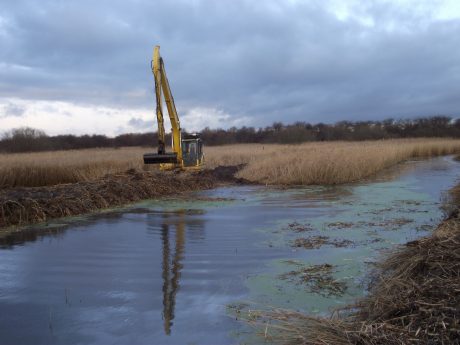
Our work at our Broomfleet roof tile production site in East Yorkshire, in partnership with the RSPB, shows how former quarry land can play a meaningful role in international conservation.
The site is being restored into wetland and coastal bird habitat, with a focus on reed bed, tree and hedgerow planting, and increasing structural diversity across the landscape. These habitats provide nesting and perching sites, shelter, and vital feeding opportunities for birds.
Although Broomfleet is an inland wetland, it sits within the wider East Atlantic Flyway - a major migration route stretching from the Arctic to South Africa. Wetlands along this route act as critical stopover points where birds can rest and refuel during their journeys. By restoring habitats at Broomfleet, we’re supporting not just local biodiversity, but a migration system that spans continents.
Colleagues have also taken part in hands-on restoration activities alongside RSPB experts, combining team‑building with practical conservation action and helping bring our biodiversity commitments to life on the ground.
World Migratory Bird Day marks the start of Biodiversity Action Month, when teams across wienerberger UK & Ireland will be spotlighting the practical steps being taken to enhance habitats, support species and embed biodiversity into everyday decision-making.
From species surveys and habitat creation to long-term site restoration, every action contributes to our commitment to achieving at least 10% biodiversity net gain across our land assets by 2030, as set out in Our Biodiversity Strategy.
Because when it comes to protecting migratory birds, and the ecosystems they depend on, every observation, every habitat and every action truly does count.
Our wienerberger Habibat bird boxes help bring nature into the built environment. Designed to integrate seamlessly into building facades, they provide safe, durable nesting and roosting spaces for a range of bird species including swifts, starlings, sparrows, robins and wrens. Available in finishes to match brick, stone or render, they support biodiversity while complementing the design of your development.

