default
© Andrew Smith

Case Study

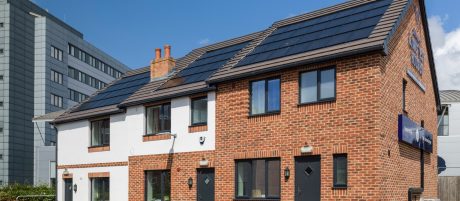
Liverpool John Moores University Test House

A collaborative research project between wienerberger and Liverpool John Moores University, exploring real-world retrofit solutions to help social housing achieve EPC band C by 2030 through evidence-based performance monitoring.

The UK government has set the ambitious target for all social housing to achieve EPC band C by 2030. This not only requires faster retrofit solutions but also reliable, evidence-based approaches that can be rolled out at scale.

wienerberger has partnered with Liverpool John Moores University to retrofit three test houses on the University campus. Each test house has been constructed to reflect the building standards of three different eras – the 1920s, 1970s, and 2010s, allowing the impact of these measures to be assessed and monitored for performance.

Once each property has undergone the (Renatus) retrofit process, continuous monitoring will run for a period of two years, generating data on energy efficiency, comfort levels, and cost impacts to demonstrate how each property performs following the retrofit.

The challenges to do this were twofold:

  • Demonstrate a whole-house retrofit process that improves energy performance, eradicates damp and mould, and makes homes healthier and more affordable to run.
  • Collect real-world, evidence-based data on how products and systems perform over time, enabling housing providers to make better-informed investment decisions.

Tenant interaction is key to each retrofit project. This can often be a stumbling block in a real life retrofit environment. In the case with wienerberger and LJMU, work was carried out with the consideration of staff and student in mind. For example, delivery of manufacturing materials had to be time slotted to suit student activities. This was carefully coordinated between the wienerberger site services team and representatives from LJMU. In a real-life project, the NEA (National Energy Action) offer generic information regarding the retrofit works to be carried out that inform tenants of the potential distribution at each of the work stages to help ease the burden of interruption whilst the retrofit is complete.

wienerberger’s Renatus retrofit solution was undertaken across the three properties. The process was as follows; 

  • Monitoring, Survey & Assessment: wienerberger and LJMU deployed advanced monitoring systems to record baseline energy, moisture, and CO₂ levels. In person surveys were also conducted to get a real-world view of the three properties. An intrusive survey and a performance survey was also carried so the team could understand how the properties were performing before the retrofit work began.
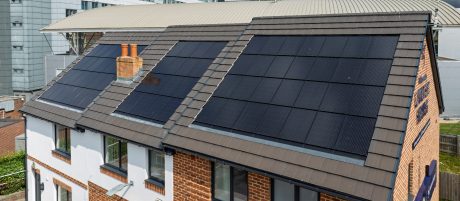
  • Design & Specification: Utilising the results of the data and in-person surveys, a bespoke design was created for each of the three properties, including fabric upgrades, air source heat pumps (across the 1970’s & 2010 houses), airtightness improvements, and sustainable roofing and cladding materials.
  • Supply: Delivery of manufacturing materials had to be time slotted to suit student activities. This was carefully coordinated between the wienerberger site services team and representatives from LJMU.
  • Inspection: Works were sequenced to replicate conditions where tenants could remain in occupation, ensuring the approach was practical and scalable. wienerbergers' site team were on site to inspect the workmanship and materials that were utilised at each of the build stages. Regular inspections guaranteed compliance with Renatus standards.
  • Guarantee & Certification: Once the retrofit work was complete, an EPC assessment was undertaken by an independent assessor. The EPC assessment rated the properties as follows:

- 1920's (EPC A, Previously EPC D)
- 1970's (EPC B, Previously EPC C)
- 2010's (EPC B, Previously EPC C)

Continuous monitoring will run for 2 years, generating data on energy efficiency, comfort levels, and cost impacts.

LJMU Test Houses
© Andrew Smith - SG PHOTOGRAPHY LTD+4407831262511

"This partnership goes beyond a typical retrofit project -

it’s a research-led demonstration of how social housing can be futureproofed through evidence-based, real-world solutions.” — John Harris, Head of Sales - Social Housing| wienerberger

Key Considerations

Sequencing of Works

Ensuring retrofits were carried out in the correct order to maximise efficiency and avoid unintended delays and issues.

Air Source Heat Pumps

Replacing the gas boiler in the 1970's and 2010 house provided a critical opportunity to test whether heat pumps can deliver equivalent comfort levels and at what cost compared to gas. The air source heat pump was also connected to the existing plumbing system, providing a methodology to avoid further large scale disruption to tenants.

Real-World Accuracy

Modelling tenant behaviour through moisture and CO₂ output required innovative methods to ensure findings are relevant for housing providers nationwide. This is why robots simulating tenant behaviour were installed to mimic real-world living conditions.

The test houses are already demonstrating their value as a real-world laboratory for retrofit innovation. Early results show that the project is delivering lower energy bills and creating healthier, more comfortable homes for residents. It is also generating evidence-based insights to guide future retrofit strategies across the social housing sector. Importantly, the initiative provides a replicable model that other housing providers can adopt to meet EPC targets with confidence and achieve measurable sustainable outcomes.

This strategic partnership between wienerberger and Liverpool John Moores University goes beyond a typical retrofit project. It represents a research-led demonstration designed to show how social housing providers can futureproof their stock, cut carbon emissions, and enhance tenants’ quality of life by reducing energy costs and creating safer, healthier homes through evidence-based solutions.

Renatus leverages real-world data to ensure that every retrofit project is proven to improve environmental performance, giving clients the confidence and peace of mind that their properties are being upgraded using measurable, evidence-driven results.

Project Summary

  • Project: Renatus LJMU Test Houses
  • Location: Liverpool John Moore University
  • Client: Liverpool John Moores University – School of Civil Engineering and Built Environment
  • Architect: wienerberger Commercial Propositions Team / Architectural Services
  • Contractor: wienerberger Site Services Team
  • Other parties involved: BRE (consultancy)
  • Timeline: May 2024 – June 2025

Products Used

Transform Social Housing with Renatus

From data insights to delivery, wienerberger’s retrofit service is designed to help you meet your goals across your housing portfolio.


View of the Nursery located in the new development

Find the right solution for your next project

Discover our full range of building envelope solutions, or be inspired with more reference projects using wienerberger products.

Downloads

Search now to download product information, technical guides, brochures and more

Contact

Got a question? Send us a message and we'll be in touch to help.

Stockists