Published 24/11/25

Published 24/11/25
With an ongoing skills shortage in construction, accelerating the development of young talent is more important than ever. Let’s explore the value of skills competitions in navigating those challenges, by developing future talent, raising professionalism and helping to build sustainable construction careers.
You don’t have to look far to see headlines about skills shortages in construction. An ageing workforce, outdated stereotypes and new skills challenges to meet modern methods of construction are all contributing factors. Almost 250,000 extra construction workers are needed to meet demand, according to the Construction Workforce Outlook 2025-29 figures.
However, progress is evident and there are promising signs that the tide is changing.
The government is investing in vocational education and apprenticeship schemes, buoyed by an increase in media interest around apprentices. Industry-led initiatives continue to promote early career development in construction too, such as the Construction Leadership Council’s skills strategy. In June 2025, the government announced more than 40,000 industry placements will be funded through a £100 million contribution, alongside £32 million from the CITB.
Alongside these initiatives, there is another way in which the collective industry is taking steps to develop construction careers; skills competitions.
From SkillBuild and Guild of Bricklayers to Super Trowel, and many more in between, competitions are crucial in developing a future-ready construction workforce. They give young people the platform not only to showcase their talents, but to develop professional skills and set targets for future success. Turning apprentices into recognised artisans, these contests have a significant impact that extends far beyond the medal ceremony.
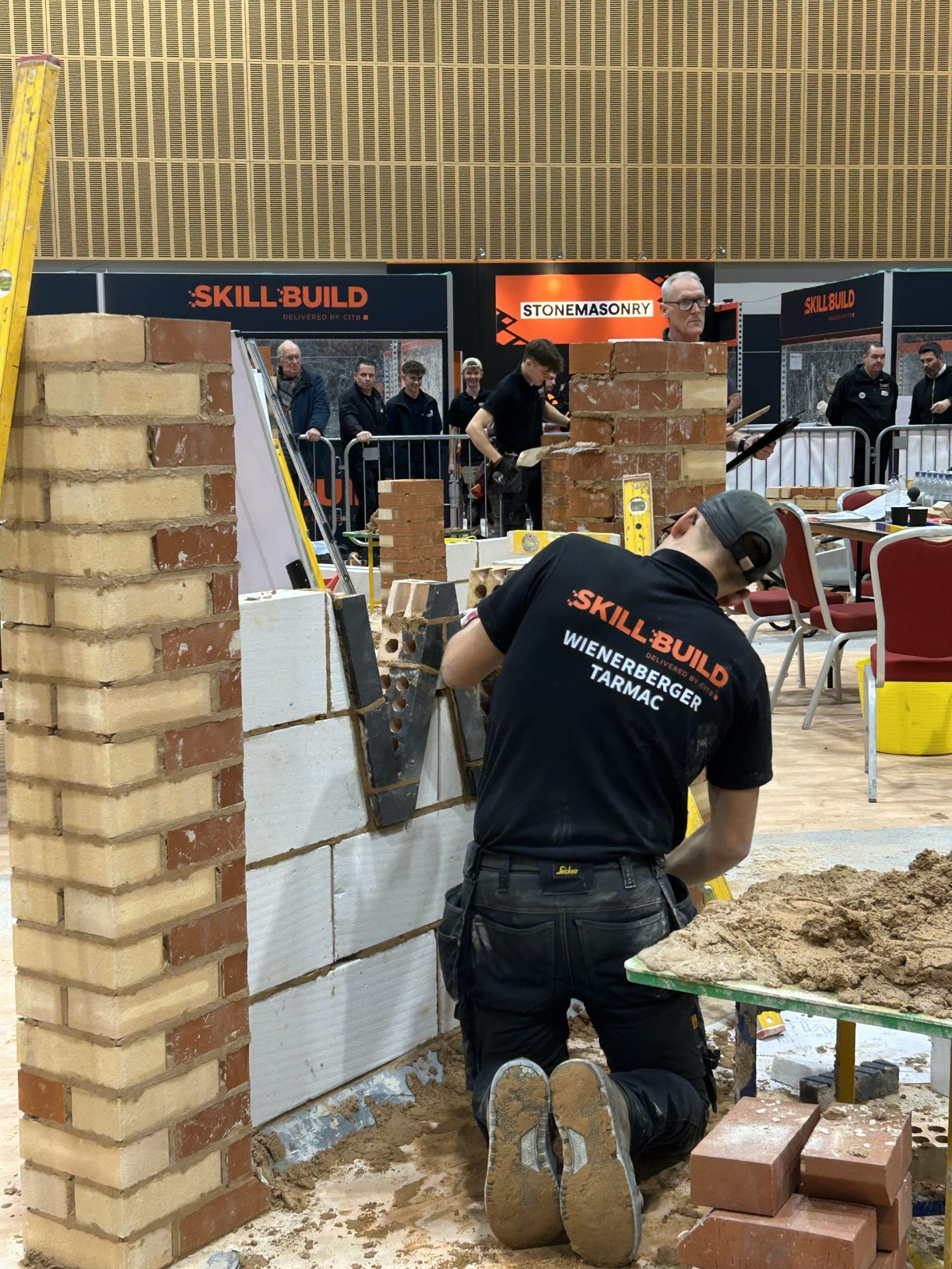
This November, we saw 80 finalists go head-to-head across ten categories, including bricklaying, in the SkillBuild National Final 2025.
SkillBuild is the UK’s biggest multi-trade construction event, which has earned its reputation as the “Olympic Games of construction training” over the past 40 years. After a series of regional heats, the finalists tackled complex construction projects over two days, testing their creativity, precision and time management at every stage. Their work was then assessed by a panel of expert judges before the winners were announced at the final awards ceremony.
Through partnerships, competitors also have access to the same high-quality materials used by the biggest contractors. wienerberger UK & Ireland is supporting the event once again this year, having donated over 60,000 bricks for use in the competitions and given £1,000 in prize money to the winners of the bricklaying competition.
Like other industry competitions, SkillBuild plays a vital role not only today, but in supporting future goals.
This is not just about laying bricks faster, it’s about building a foundation for leadership, innovation and lifelong careers. CITB figures show 85% of SkillBuild participants reported improved job prospects and faster career progression after competing. One recent participant said: “Competing at SkillBuild taught me to work under pressure, pay attention to precision, and take pride in every project.”
While youth unemployment remains a concern, competitions of this kind can help to disprove the myth that future leaders in construction are only found in the boardrooms. In contrast, leadership skills can co-exist with practical talent, putting craftsmanship at the forefront of progress.
With this in mind, competitions help raise the profile of inspiring alternatives to traditional academic paths:
If you’re a young person, make sure to investigate skills competitions as an avenue to accelerate your career. If you’re an employer, continue to support and promote those competitions in any way you can, including by giving your own teams the platform to develop themselves.
Let’s give competitions the credit they deserve.